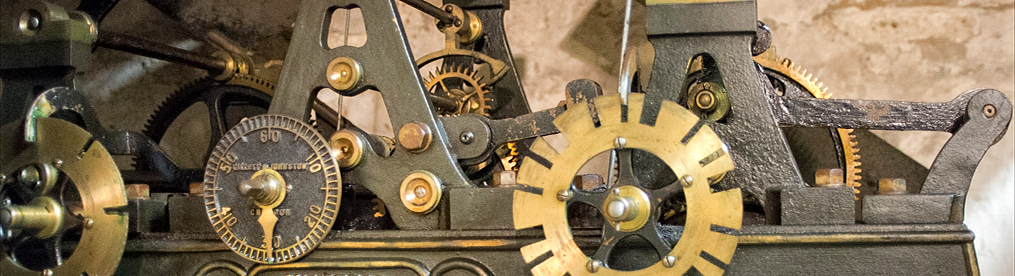
In part 1 I started to look at a long case clock with a broken click spring on the strike barrel. Here I dismantle the clock and find a number of faults that need to be attended to!
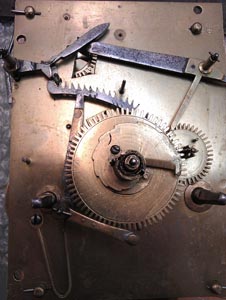
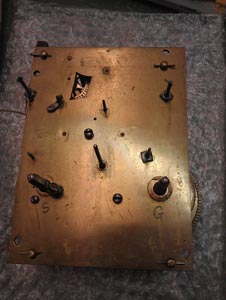
The first view above shows the mechanism with hands, dial and false plate removed, the second with the strike parts removed, together with the bridge and motion work. We can start to see some of the clock’s history now! Most, if not all, of the parts of the clock have been repaired at some stage. Every one (yes, every one!) of the pivot holes in both front and rear plates has been bushed, and nearly all are worn to the stage where they require to be renewed.


The plates have been extensively hammered to try to close the holes, and even the winding arbor bushes, “top-hat” style, have been struck.


The great wheel on the strike barrel (above left) is not original, and the great wheel on the going barrel (above right) has been extensively repaired, having been broken into three pieces at some stage. Note the big difference in length of teeth between the two wheels. In both cases there was too much clearance at the wheel centre on the arbor, and this is affecting the depthing with the next pinion. The domed brass retaining washers which hold the great wheels to the barrel but allow it to turn (shown above right) had lost most of their spring and were ineffective.
Here are close-ups of the repairs to the going train great wheel; note the inserted tooth, and the misalignment of the rim!


Here are further photos of parts of the mechanism that have been repaired at some time in the past.


